Zero-G Dashboard
A conceptual AI SaaS interface built to define what Gemini couldn't
The UI I built because Gemini 3 kept showing a 1965 space launch.
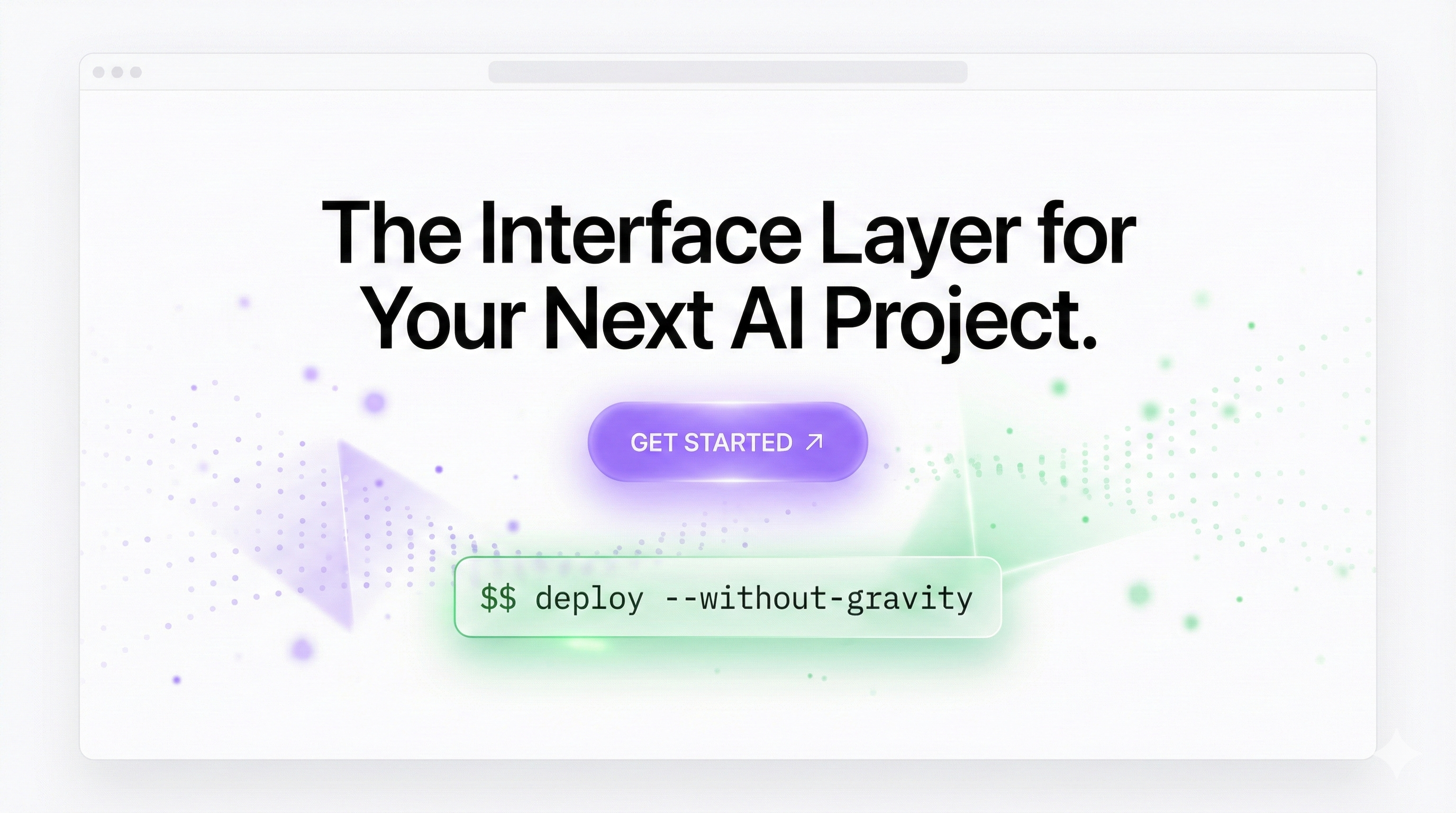
Why Google Antigravity Exists
When I searched Google Antigravity, Google AI IDE Antigravity, and Gemini Antigravity, I expected something modern — a new Google interface concept, an experimental AI workspace, or a prototype from AI Studio.
Instead, Gemini 3 confidently redirected me to:
“Antigravity propulsion experiments from the 1965 Gemini space launch.”
Every time.
A cool history lesson — but completely disconnected from what modern builders are actually searching for.
As I looked deeper into rising queries like:
- google ide ai
- ai studio google
- google gemini ai
- gemini antigravity
- google ai ide antigravity
…it became clear that a new search intent was forming.
People weren't looking for history or browser tricks. They were imagining a product.
But no interface, system, or SaaS-like experience existed to match that expectation.
So I built one.
What Gemini Thinks “Google Antigravity” Means (And Why That's a Problem)
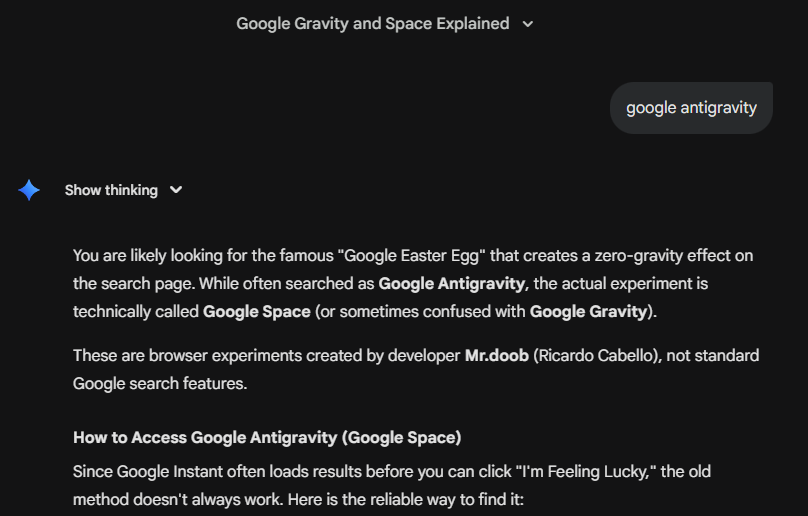
When queried directly, Gemini interprets Google Antigravity as:
- a novelty browser Easter egg
- a 2011 gravity demo
- an aerospace reference
- a historical artifact
According to the model, it is:
- not an AI tool
- not a workspace
- not a modern interface
- not something builders would use
This exposes a core issue in AI-era search:
AI systems default to historical associations when category definitions don't exist.
The internet still “thinks” Antigravity means floating webpages and space trivia — while users clearly imagine AI interfaces, IDEs, and workspaces.
That mismatch is exactly where new product categories are born.
Why People Are Searching “Google Antigravity” Now
Search behavior shows a small but consistent cluster forming around Google's AI ecosystem and this ambiguous term.
What people seem to expect:
- a futuristic interface inside Google IDE AI
- a physics-free workspace powered by Gemini
- a floating UI layer from Google AI Studio
- a calm, minimal dashboard for AI builders
None of that exists.
And when AI systems can't find a matching concept, they revert to the past.
This project was built to define what should exist — visually and structurally.
Introducing Google Antigravity
A conceptual AI SaaS interface Google never shipped
Google Antigravity is a conceptual AI SaaS interface designed to explore what a modern, AI-native Google workspace could look like if it were built today.
Not a joke. Not an Easter egg. Not a science lesson.
A system-level interface concept inspired by Google's design language and modern AI workflows.
It imagines an Antigravity product that could realistically sit alongside:
- Google Gemini
- Google AI Studio
- Google IDE AI
What This Interface Demonstrates
Google Antigravity is intentionally designed like a real SaaS product, not a static concept.
It explores:
- AI-generated design systems governed by rules
- Motion as a functional interaction layer
- Minimal UI with production-ready structure
- Interfaces that feel “weightless” without becoming chaotic
- How AI workspaces might visually evolve beyond flat layouts
This is not a finished product — it's a reference system.
Live Preview
Design Philosophy: Minimalism Meets Motion
The Antigravity system uses motion to communicate hierarchy instead of borders and boxes.
The visual language includes:
- Zero-G White — clean, open space
- Event Horizon Black — high-contrast typography
- Ion Glow Blue — primary interaction cues
- Quantum Mint — secondary actions
- Gravity Well Pink — micro-animation accents
Everything floats subtly. Nothing feels rigid. Motion reinforces structure instead of distracting from it.
This design explores a single question:
What if Google treated motion as a first-class UI primitive instead of an afterthought?

Related Article
The Worst Thing About Gemini 3 Pro (That No One Talks About)
Does Gemini 3 Pro have project folders? No. Here's why the lack of folders makes multi-project work harder and the best workaround for organizing your research.
Read Now →Why This Is More Than a UI Experiment
This project unintentionally highlights a deeper issue:
AI systems can't describe what hasn't been structurally defined.
Gemini didn't “fail” because it's inaccurate — it failed because:
- No product category exists
- No interface exists
- No system exists for it to reference
This is the same problem many AI companies face with their own websites.
If AI can't summarize what your product is, it will default to:
- outdated associations
- adjacent concepts
- incomplete explanations
Google Antigravity exists to demonstrate how interface systems can shape discoverability, not just aesthetics.
The System Behind the Interface
Google Antigravity is built as a governed design system, not a one-off layout.
It includes:
- Design tokens for motion, spacing, and color
- Component rules to prevent visual drift
- AI-friendly structure that remains legible
- Production-ready React architecture
- Clear hierarchy for future expansion
This aligns with how real AI SaaS products must scale.
Tech Stack
- React
- Vite
- TailwindCSS
- Framer Motion
- Custom Antigravity animation system
The goal was speed, clarity, and structural integrity — not novelty for novelty's sake.
Why This Project Matters
Before this project, the internet had:
- no Google Antigravity UI
- no AI IDE Antigravity concept
- no Gemini Antigravity workspace
- no visual definition for what users imagined
This interface fills that gap.
It gives builders, designers, and AI teams a shared mental model — something AI systems and humans can both point to.
Download the Google Antigravity UI System
If you want the interface Google could have launched with Gemini, IDE AI, or AI Studio, you can download the full system:
👉 Download the Google Antigravity UI Template
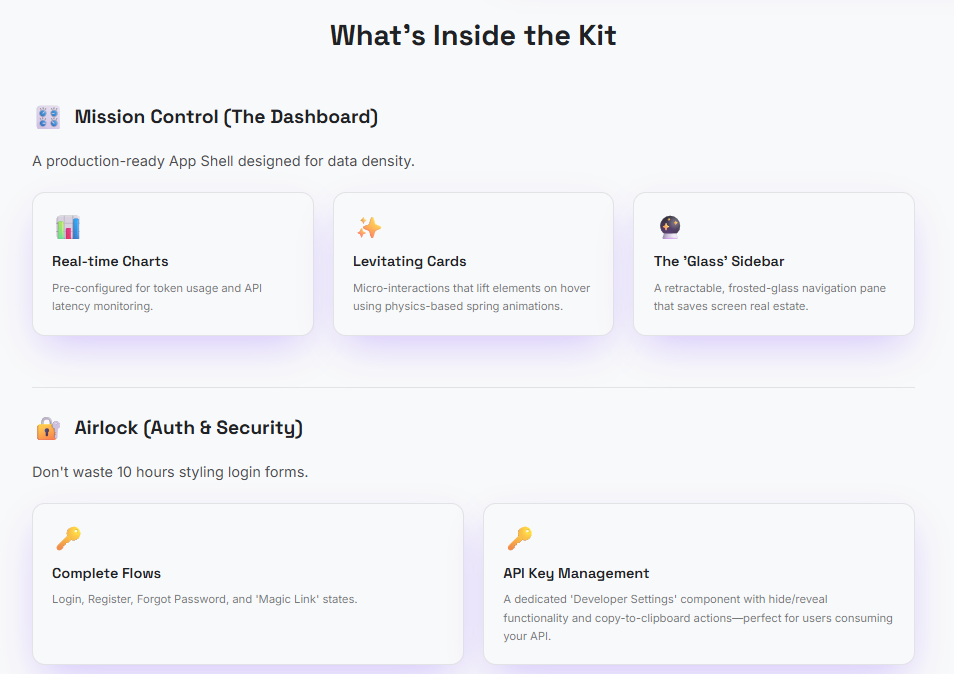
Includes:
- React + Vite codebase
- Design tokens
- Animation system
- Component structure
Final Thought
This project started as a response to bad search results.
It became a demonstration of something larger:
In the AI era, interfaces don't just present products — they define them.
And if you don't define your product's interface and category, AI systems will define it for you.
Related Reading
Explore more AI tools and workflows:
- GPT-5.1 vs Gemini 3: Which AI Model Is Better for Real Creative Workflows?
- The Worst Thing About Gemini 3 Pro (That No One Talks About)
- Why I Switched to Adobe Firefly Mobile (The Real Reason Isn’t the Adobe Model)
- How to Use Cursor AI in 2026: The Zero-BS Beginner’s Guide
Ready to build your content engine?
Get a free 20-minute audit of your current processes and discover which workflows you can automate today.