AI-Generated Design Systems Aren't the Problem — Ungoverned Ones Are
AI-generated design systems didn't break product design. Teams broke design systems by skipping governance.
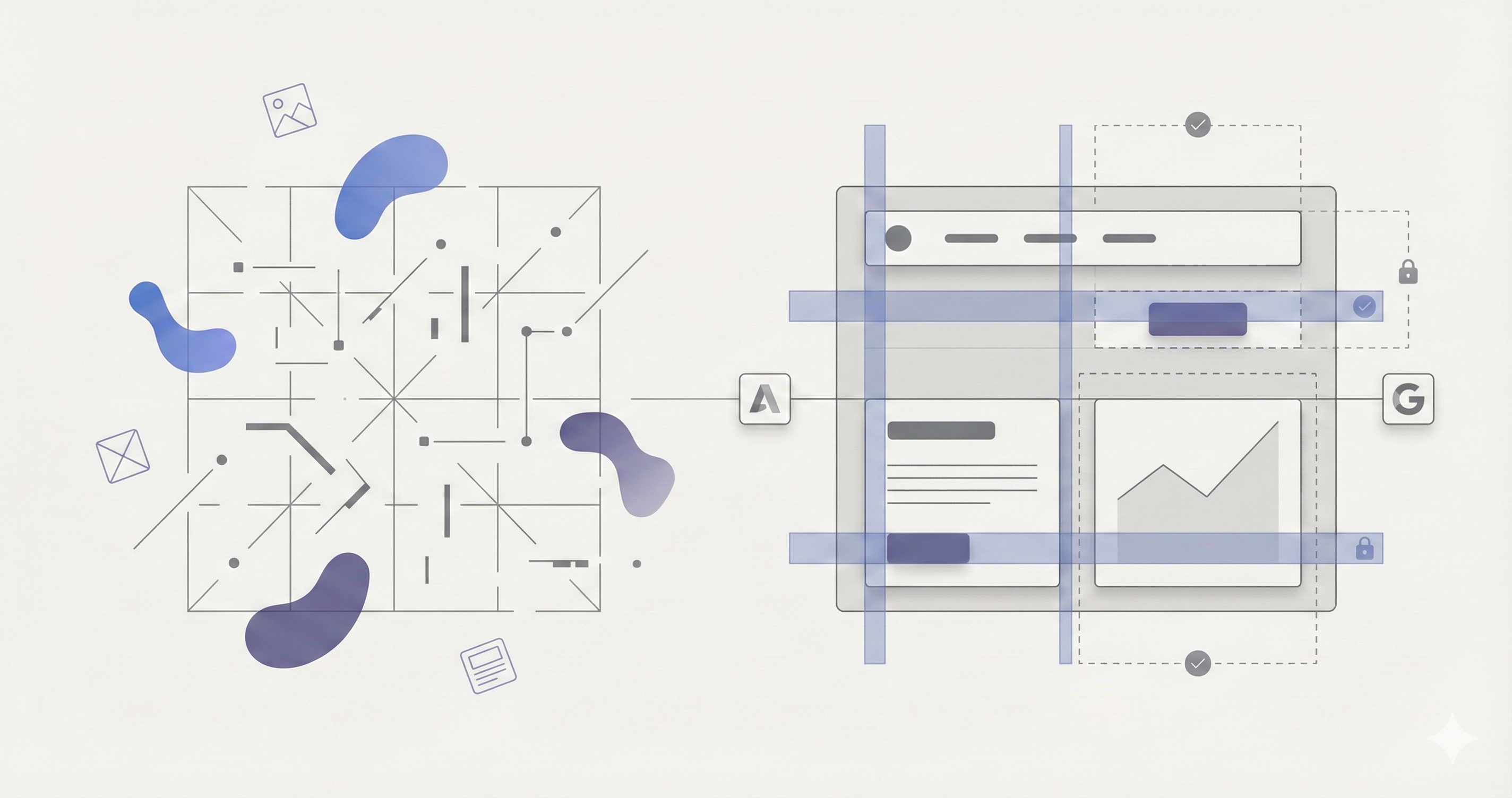
In 2025, AI is no longer a novelty in interface design. It generates tokens, components, layouts, flows, and even production-adjacent code in seconds. Tools promise instant systems, instant UI, instant velocity.
And yet, most AI-generated design systems fail in the same predictable ways:
- They look interchangeable
- They collapse under scale
- They create technical debt faster than they remove it
The problem isn't AI.
The problem is shipping design systems without rules.
The Real Issue: Speed Without Structure
AI is exceptional at generation. It is terrible at judgment without constraints.
Most teams treat AI design tools like accelerators:
“Generate a system, we'll fix it later.”
But design systems aren't static artifacts. They are living contracts between:
- design and engineering
- interface and behavior
- aesthetics and accessibility
- product intent and long-term scale
When AI outputs a system without governance, what you get is:
- visual sameness
- brittle component logic
- inaccessible interactions
- unexplainable UI decisions
That isn't innovation. That's unowned complexity.
Why AI-Generated UI Feels “Samey”
AI models are trained on what already exists.
That means:
- common layouts
- familiar interaction patterns
- safe aesthetic averages
Left unchecked, AI optimizes toward:
“What looks most statistically acceptable?”
This is why so many AI-generated interfaces feel:
- competent but soulless
- clean but forgettable
- modern but indistinct
Originality doesn't come from generation. It comes from constraints applied intentionally.
Governed systems escape sameness because they encode:
- brand logic
- interaction philosophy
- motion rules
- hierarchy decisions
Without that layer, AI can only remix the past.
Production-Ready ≠ Visually Complete
One of the most dangerous myths around AI design systems is that visual completeness equals production readiness.
It doesn't.
A system is not production-ready if:
- accessibility is optional
- keyboard navigation is broken
- ARIA roles are missing
- state logic is implicit
- animations fight performance
- components can't evolve
AI often generates convincing shells — not resilient systems.
That's why teams adopting AI UI without governance experience:
- debugging nightmares
- stalled iteration
- painful rewrites six months later
Speed at the start becomes drag later.
Governance Is the Missing Layer
Governance sounds corporate. In practice, it's simple.
Governance answers questions like:
- What is a component allowed to do?
- When does motion apply — and when does it not?
- How does this scale across products?
- What breaks first under load?
- How does AI consume this system later?
A governed design system defines:
- design tokens with intent
- interaction rules, not just effects
- accessibility as a default, not a checklist
- architectural boundaries
AI should generate within these rules — not invent them.
The “Vibe Coding” Trap
There's a growing anti-pattern in AI-driven development:
accepting outputs because they feel right
This is “vibe coding.”
It works until:
- something breaks in production
- accessibility audits fail
- another engineer touches the code
- the product grows beyond its first use case
Ungoverned AI systems produce code no one truly understands — including the team shipping it.
Governance isn't anti-AI. It's how you retain agency.
What a Governed AI-Generated Design System Looks Like
A healthy AI-assisted design system:
- uses AI for acceleration, not decision-making
- encodes brand and interaction philosophy
- prioritizes maintainability over novelty
- treats accessibility as structural
- supports real product scale
AI becomes:
- a force multiplier
- not a creative crutch
- not an architectural authority
This is the difference between:
- AI-generated UI
- and AI-governed interface systems
Why This Matters for AI Products Specifically
AI products live or die on trust.
Users must understand:
- what the system is doing
- why it's doing it
- when it's safe
- when it's wrong
Interface systems for AI can't be ornamental. They must communicate intent, uncertainty, and control.
Ungoverned UI erodes that trust instantly.
The Future Isn't Fewer Designers — It's Better Systems
AI isn't replacing designers or engineers.
It's raising the bar for:
- system thinking
- architectural clarity
- interface intentionality
The teams that win won't be the ones generating the fastest UI.
They'll be the ones who:
- govern AI outputs
- design for scale
- build interfaces that explain themselves
- ship systems, not screenshots
Final Thought
AI-generated design systems aren't dangerous.
Unowned systems are.
If you don't define the rules, AI will happily invent them for you.
And you'll be debugging that decision for years.
Related Reading
Explore more interface architecture and design systems:
- Google Antigravity: The UI I Built After Gemini 3 Kept Showing a 1965 Space Launch
- Google AI Mode: What It Is, Why It's Annoying, and Whether You Can Turn It Off
- AI Business Systems for Modern Teams
- AI Company Websites
Ready to build your AI business system?
Get a free 20-minute audit of your current processes and discover which workflows you can automate today.